Introduction
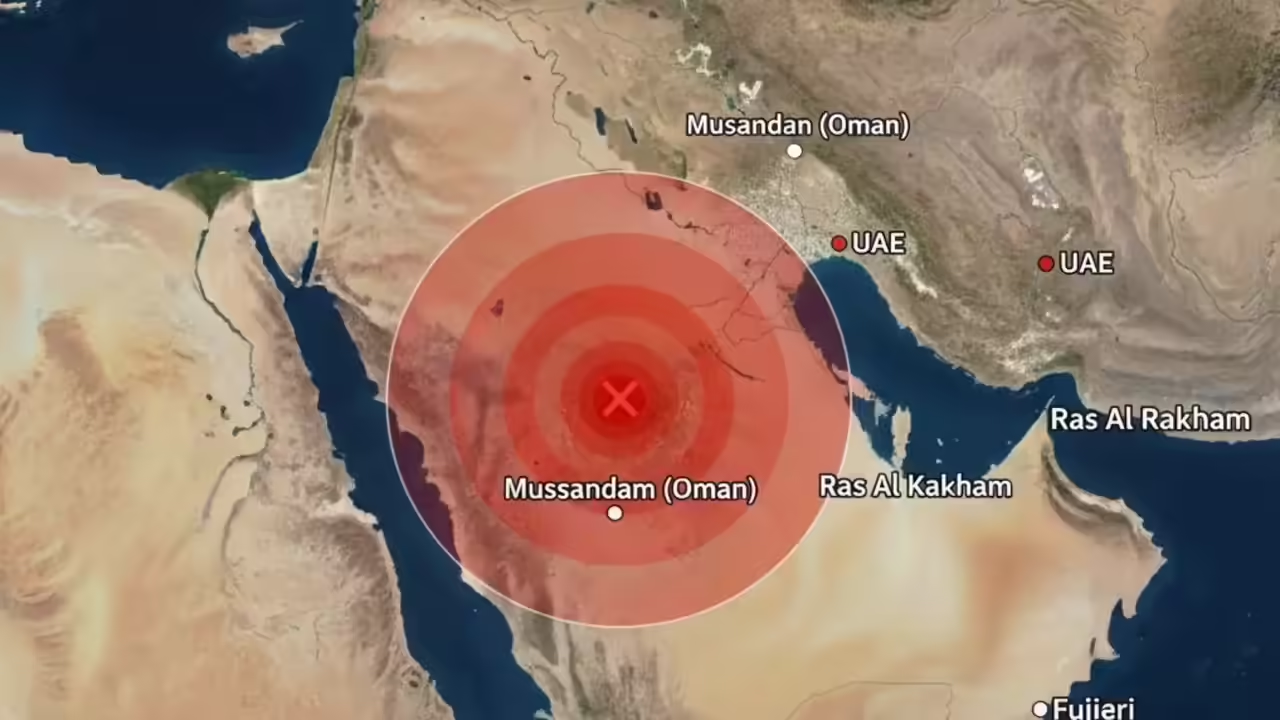
Experts say the Arabian Peninsula experiences mild earthquakes because the region sits on one of the most stable tectonic plates in the world. Scientists explain that the Arabian Plate holds very low levels of internal stress and strain. This reduces the chances of strong earthquakes forming deep within the plate. The region still feels tremors, but most remain small and harmless. The plate moves steadily, and the slow movement reduces sudden pressure build-up. This stability helps protect major cities across the Gulf from severe seismic events.
Clear Geological Patterns
New research highlights the geological reasons behind the region’s mild seismic behaviour. Specialists say the plate’s boundaries sit far from many populated areas. This distance lowers the impact of most quakes that form near the edges. The rock layers beneath the Arabian Peninsula also show fewer fractures. This limits how much energy the ground can release during an earthquake. Because of these factors, the Arabian Peninsula experiences fewer damaging events compared to other global hotspots. Scientists continue to study these patterns to improve local safety.
 Can AI Predict Earthquakes Now?
Researchers now turn to artificial intelligence to improve monitoring and early warning systems. AI tools can read massive amounts of geological data within seconds. These systems detect patterns that humans may miss. AI models can also study vibrations, plate movement, and stress changes to estimate possible risk zones. Experts say AI cannot predict the exact time or place of an earthquake yet. However, AI can warn about unusual seismic activity and help authorities prepare faster. This makes AI a powerful tool in modern disaster management.
Future Monitoring
The Middle East continues to invest in smart monitoring networks. These networks use sensors, satellites, and AI to watch tectonic movements in real time. Scientists believe these tools will improve early detection and public safety. The region’s geological stability remains strong, but new technology helps strengthen readiness. Officials encourage the use of AI-based alerts to guide emergency planning. The shift toward high-tech systems marks a major step in how the region studies the Earth.