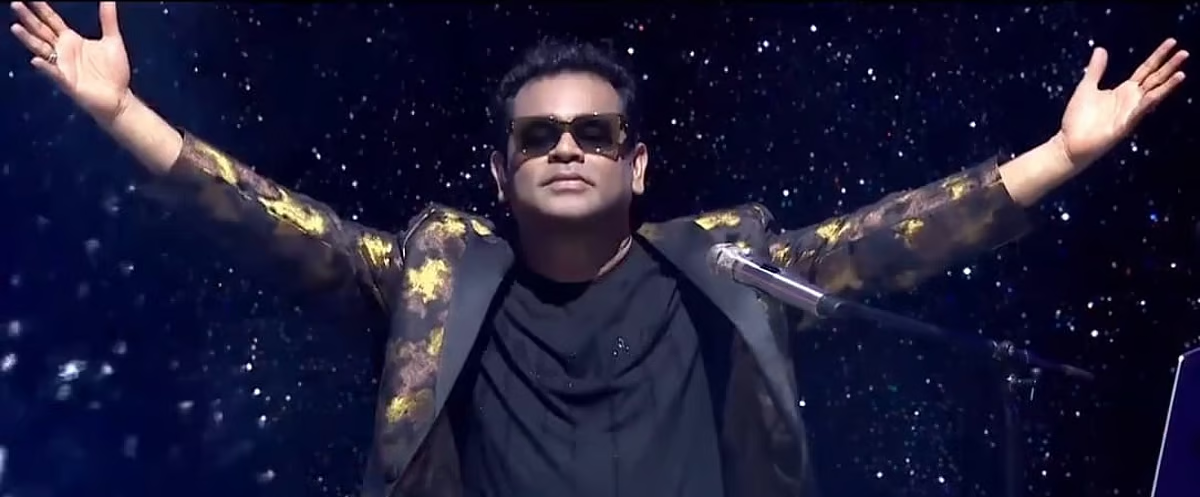
AR Rahman Says Bollywood Has Changed
Acclaimed music composer AR Rahman has ignited a major debate within the Indian film industry. In a recent interview, the celebrated maestro stated his belief that Bollywood has fundamentally changed. He used the phrase “Chinese whispers” to describe the spread of rumours and a shift in the industry’s power dynamics. Rahman made these remarks while discussing his work on the upcoming historical film ‘Chhaava’. His comments quickly spread across news and social media platforms. Several prominent Bollywood stars have now pushed back strongly against his assessment. This public disagreement has opened a rare window into the tensions and evolving relationships within the massive Mumbai film industry, pitting one of its most respected figures against its current leading actors.
What Did AR Rahman Actually Say About Bollywood?
AR Rahman spoke candidly in an interview about his current experiences. He expressed a feeling that the collaborative and trusting spirit of earlier eras in Bollywood has diminished. The Oscar-winning composer referenced “Chinese whispers,” a term for a game where a message gets distorted as it is passed along. He suggested that gossip and indirect communication now create a toxic atmosphere. Rahman implied that decision-making power has shifted, making it harder for genuine artistic voices to be heard clearly. He contrasted this with the past, where he felt directors and musicians had more direct and respectful creative partnerships with producers and stars. His words were not an attack, but a melancholic observation on an industry he helped define.
The ‘Chinese Whispers’ Comment and Industry Dynamics
The phrase “Chinese whispers” perfectly captures Rahman’s critique. He described a system where communication is no longer clear or direct. Instead of open conversations, he perceives a culture of rumours, second-hand information, and people speaking behind each other’s backs. This environment, he suggested, leads to misunderstandings, eroded trust, and decisions based on misinformation rather than artistic merit. It points to a more corporate, network-driven, and gossip-fueled side of modern Bollywood. For an artist like Rahman, who values deep, focused creative work, this atmosphere can feel hostile and draining, making the process of making music more politically complicated than it once was.
 How Stars Are Pushing Back Against Rahman’s Claims
The reaction from several top Bollywood stars was swift and strong. Actors took to social media and gave statements to the press. They countered that Bollywood remains a welcoming and collaborative place for true talent. Some stars expressed deep respect for Rahman’s musical genius but disagreed with his characterization of the industry. They argued that the industry has evolved positively, becoming more professional and inclusive. Others implied that his experience might be isolated or related to specific projects. The pushback underscores a generational or experiential divide. While Rahman looks back on a golden era of the 1990s and 2000s, current stars feel they are operating in a vibrant and successful modern ecosystem that still values great music and artists.
The Context: Rahman’s Work on ‘Chhaava’
Rahman’s comments emerged while he was promoting the period drama ‘Chhaava,’ starring Vicky Kaushal. He is composing the music for this large-scale historical film. Discussions about the film’s demanding creative process likely prompted his broader reflections. Working on a major studio project in today’s environment may have highlighted the changes he laments. Perhaps he faced bureaucratic hurdles or layers of approval that frustrated him. His experience on this specific film seems to have crystallized his feelings about the wider shift in Bollywood’s culture. It serves as a real-time example of the new dynamics he finds challenging, compared to the more director-led projects of his early career like ‘Roja’ and ‘Lagaan’.
The Larger Debate: Has Bollywood’s Soul Changed?
Rahman’s comments have sparked a larger, essential debate. Has Bollywood lost its creative soul to corporatization and gossip? Supporters of Rahman’s view point to the rise of star clout, marketing committees, and a risk-averse approach that sidelines experimental music. They argue that the magic of spontaneous collaboration is gone. The opposing view, held by the stars pushing back, is that the industry is bigger, more global, and more business-savvy, which is a form of progress. They believe great art is still being made, just within a more structured system. This debate is about more than gossip; it is about where power resides and how art gets made in India’s dream factory today.
A Maestro’s Melancholy and an Industry’s Identity
The controversy highlights a poignant moment. AR Rahman, a global icon who gave Bollywood some of its most beloved sounds, feels somewhat alienated from its current form. His sadness is palpable. Simultaneously, the industry’s current champions are fiercely defending its honour and vitality. This clash is not about right or wrong, but about perspective. It reflects the natural tension between an industry’s founding legends and its current rulers. Whether this leads to introspection or further division remains to be seen. However, it has undoubtedly forced everyone to ask a critical question: In the pursuit of bigger box office and global reach, what precious elements of the old Bollywood, if any, must be preserved to keep its heart beating?