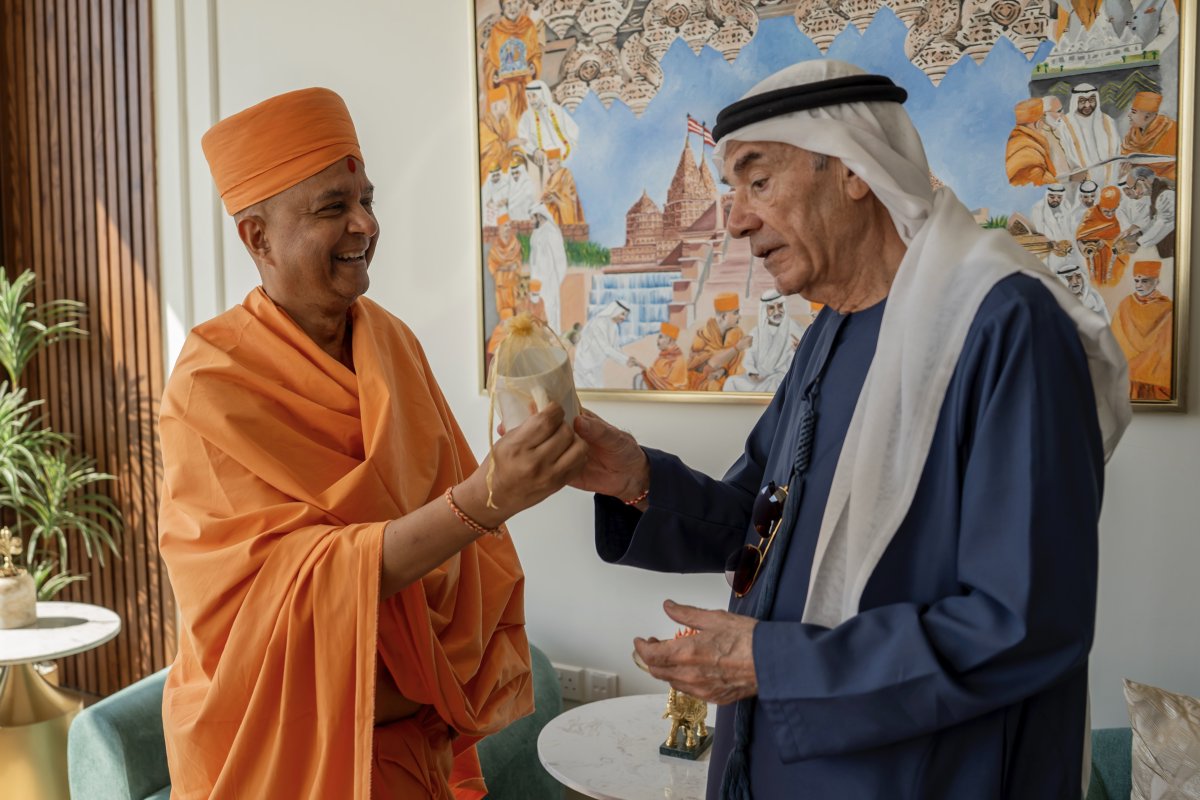
Zaki Nusseibeh Praises BAPS Hindu Mandir
A senior Emirati cultural figure has delivered a powerful message of unity. Zaki Nusseibeh, a key advisor and Cultural Advisor to the UAE President, has spoken about the new BAPS Hindu Mandir in Abu Dhabi. He expressed profound admiration for the landmark house of worship. Nusseibeh stated that when he visits the Mandir, he sees “the spirit of Sheikh Zayed.” He was referring to the late Sheikh Zayed bin Sultan Al Nahyan, the founding father of the UAE. This statement carries immense symbolic weight. It connects the temple directly to the nation’s core values of tolerance and coexistence established by its founder. The senior figure praised the Mandir not just as a religious site, but as a vital bridge between faiths and civilizations, embodying the modern UAE’s vision.
What is the BAPS Hindu Mandir in Abu Dhabi?
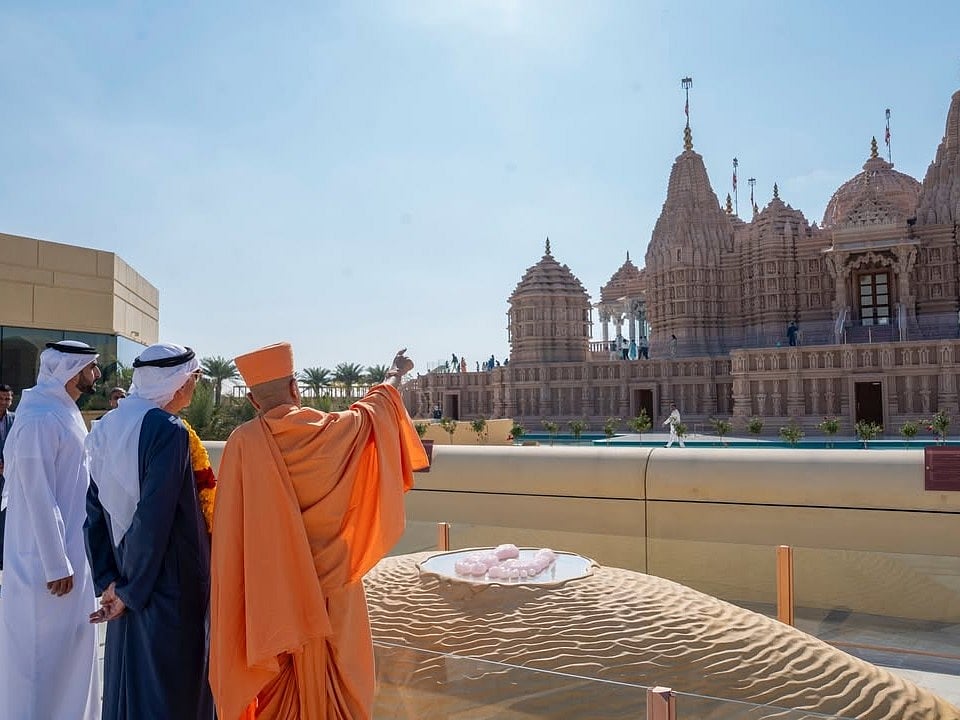
The BAPS Hindu Mandir is a historic and beautiful stone temple in Abu Dhabi. It is the first traditional Hindu stone temple in the Arabian Peninsula. The Bochasanwasi Akshar Purushottam Swaminarayan Sanstha (BAPS) organization built it. The Mandir opened its doors in early 2024 after years of careful planning and construction. It features incredible hand-carved pink sandstone and white marble. Artisans from India crafted the stone in Rajasthan before shipping it to the UAE for assembly. The temple complex includes a prayer hall, community center, and gardens. It serves the large Hindu community in the UAE. It also stands as a global symbol of interfaith harmony and architectural beauty, attracting visitors of all backgrounds.
Why Zaki Nusseibeh Invoked the Spirit of Sheikh Zayed
Sheikh Zayed bin Sultan Al Nahyan was renowned for his deep commitment to tolerance. He believed a nation’s strength came from its people’s unity and mutual respect. By saying he sees Sheikh Zayed’s spirit at the Mandir, Zaki Nusseibeh is making a profound comparison. He is stating that the temple’s very existence fulfills the founding father’s vision. The Mandir represents the practical realization of Zayed’s dream: a society where diverse communities can practice their faith freely and peacefully side-by-side. This endorsement from a high-ranking Emirati official validates the temple as a true national project. It anchors the Mandir not as a foreign structure, but as an integral part of the UAE’s own story of inclusivity.
 The Mandir as a Bridge Between Faiths and Civilisations
Zaki Nusseibeh specifically highlighted the temple’s role as a bridge. A bridge connects two separate shores. Similarly, the BAPS Mandir connects the ancient Hindu civilization with the modern Arab civilization of the Gulf. It connects the Indian community with their Emirati hosts. It connects the spiritual values of East and West. The temple’s design itself incorporates symbolic elements from both Arab and Indian culture. Its presence encourages dialogue, understanding, and shared cultural appreciation. It moves beyond mere coexistence to active engagement. People of all faiths are welcome to visit, learn, and reflect. This transforms the Mandir from a place of worship for one community into a landmark of universal human fellowship for the entire world.
The UAE’s Official Policy of Tolerance and Inclusion
The praise for the Mandir fits perfectly within the UAE’s national policy framework. The UAE government has formally established a Ministry of Tolerance and Coexistence. It hosts the Pope and the Grand Imam of Al-Azhar for historic interfaith meetings. The “Year of Tolerance” and the “Year of the 50th” celebrated these values. The construction of the BAPS Mandir was actively supported by the UAE leadership, including the donation of the land. Zaki Nusseibeh’s comments reinforce that this support is not just political, but deeply cultural and philosophical. It shows that tolerance is woven into the nation’s identity, from its founding past to its ambitious future, with projects like the Mandir as living proof.
Global Resonance of the Abu Dhabi Landmark
The message from the UAE carries global importance. In a world often divided by religious conflict, the BAPS Hindu Mandir in Abu Dhabi stands as a powerful counter-narrative. It shows that a Muslim-majority nation can not only accept but celebrate and facilitate the construction of a major Hindu temple. This act of grace and confidence resonates worldwide. It positions the UAE as a thought leader in global harmony. The temple has already become a must-visit site for international dignitaries and tourists. It generates positive stories that challenge stereotypes. Zaki Nusseibeh’s words amplify this message, telling the world that the spirit of Sheikh Zayed is alive, and it looks like a hand-carved stone temple shining in the Abu Dhabi sun.
A Living Legacy for Future Generations
The BAPS Hindu Mandir is more than stone and mortar. As Zaki Nusseibeh affirmed, it is a living legacy. It is a physical promise to future generations that diversity is a strength. Children growing up in the UAE today will see the Mandir as a normal and celebrated part of their landscape. They will inherit a model of society where different places of worship share the same skyline in peace. This is the ultimate fulfillment of Sheikh Zayed’s vision. The senior advisor’s remarks ensure that the temple’s spiritual significance is matched by its national symbolic importance. It is now permanently etched into the cultural and moral identity of the United Arab Emirates as a beacon of hope and human unity.