Egypt New Oil Production from Gulf of Suez Field
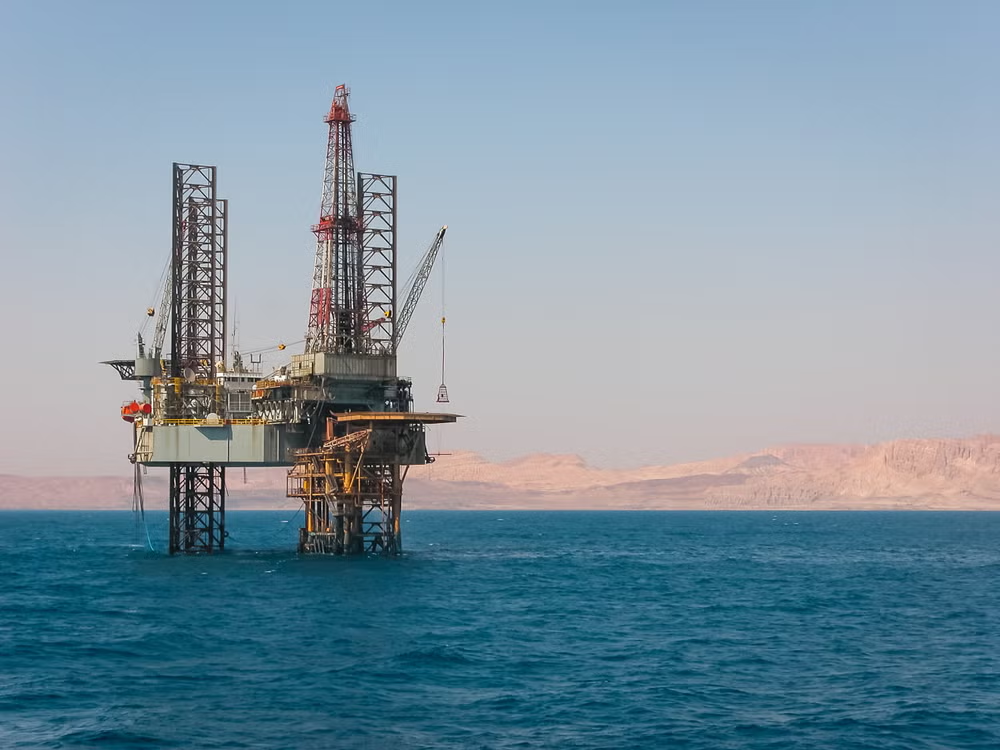
The Egyptian Ministry of Petroleum and Mineral Resources has announced a significant development. The country has successfully brought a new oil well online. This new production is located in the Gulf of Suez, a key hydrocarbon region. The specific well is named Al-Wasl-4. It has officially started producing crude oil. The current output is approximately 2,250 barrels of oil per day. This new flow contributes directly to Egypt’s national production goals. It also helps the country work toward greater energy self-sufficiency and economic stability. The successful operation is a result of continued investment and exploration by the Egyptian petroleum sector and its international partners.
Details of the Al-Wasl-4 Well and Its Location
The Al-Wasl-4 well is a strategic asset in a known oil-producing area. It is situated within the Gulf of Suez, west of the Sinai Peninsula. This region has a long history of oil and gas exploration. The well was drilled by a consortium involving the Egyptian General Petroleum Corporation (EGPC) and its partners. The drilling operation reached the target geological formations successfully. Initial testing confirmed the presence of commercially viable crude oil. The commencement of production at 2,250 barrels per day marks the transition from exploration to active contribution to the nation’s energy supply.
The Significance for Egypt’s Energy Strategy
This new production is a key part of Egypt’s broader energy strategy. The country aims to increase its domestic oil and gas output. Higher domestic production reduces the need for expensive imports. It improves the national trade balance. It also strengthens energy security for homes and industries. Every new barrel produced inside Egypt saves foreign currency. This supports the Egyptian economy and the value of the Egyptian pound. The Gulf of Suez remains a cornerstone of this strategy, and the Al-Wasl-4 well proves that existing fields still hold valuable potential for increased recovery and new discoveries.
The Role of the Gulf of Suez in Egyptian Oil History
The Gulf of Suez is the oldest and most prolific oil region in Egypt. Production began there over a century ago. It has yielded billions of barrels of oil since its discovery. While some fields are mature, modern technology allows companies to find new reservoirs and extend the life of old ones. The success at Al-Wasl-4 demonstrates this perfectly. It shows that advanced seismic imaging and drilling techniques can unlock new resources even in well-explored areas. The Gulf continues to be a vital national asset for energy and economic development.
 Impact on Production Targets and Economic Goals
The additional 2,250 barrels per day directly boosts Egypt’s overall production figures. While not a gigantic field, every increment counts. It helps offset natural production declines from older wells elsewhere. The revenue from this oil flows to the state treasury. It funds public services and development projects. Furthermore, successful projects like this attract more foreign investment into Egypt’s energy sector. International oil companies see that Egypt is a place where projects can move from planning to production efficiently. This builds confidence for future exploration contracts and joint ventures.
Technical and Operational Achievements Behind the Project
Bringing a new well online is a complex technical feat. It involves precise geology, engineering, and logistics. The teams had to drill safely in an offshore environment. They installed the necessary wellhead equipment and pipelines to transport the crude. The production rate of 2,250 barrels per day is a strong start. It may increase as operators better understand the reservoir’s characteristics. This achievement highlights the skill of the Egyptian petroleum engineers and the effective collaboration between national companies and their foreign partners.
Future Exploration and Production Outlook in the Region
The success of Al-Wasl-4 encourages further activity. It proves that the Gulf of Suez basin still has untapped potential. The Egyptian Ministry of Petroleum will likely offer more exploration blocks in the area. Companies will use data from this well to plan additional drilling nearby. The focus will be on using cutting-edge technology to maximize recovery from both new and existing fields. This project is likely just one part of a renewed push to thoroughly assess and utilize Egypt’s hydrocarbon resources for the benefit of its growing population and economy.
Egypt’s announcement of new oil production is a positive step for the nation. The Al-Wasl-4 well in the Gulf of Suez is now a contributing asset. It provides immediate economic benefits and reinforces a key industry. This development underscores Egypt’s ongoing role as a significant energy producer in the Mediterranean and North African region. It shows a commitment to harnessing natural resources wisely. The continued development of its oil and gas sectors remains fundamental to powering Egypt’s future growth and prosperity.