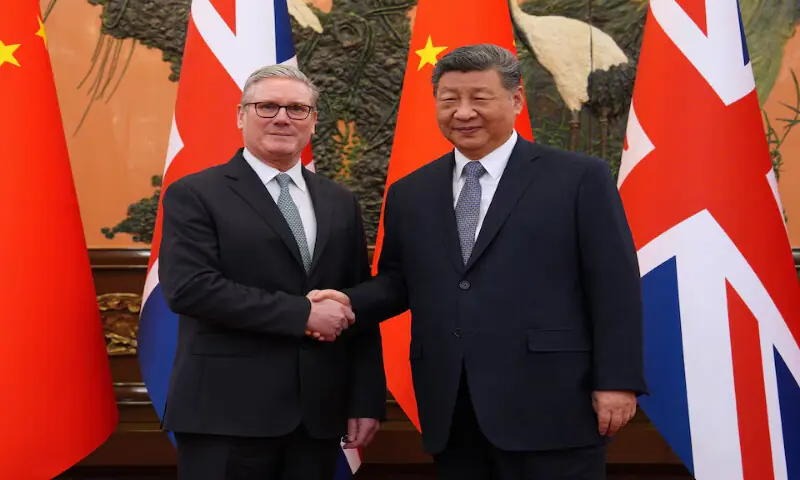
1) Starmer Lands in Beijing for High-Stakes Talks
British Prime Minister Keir Starmer has arrived in Beijing for a major diplomatic visit. He plans to meet Chinese President Xi Jinping during the trip. The visit will last three days. It comes at a time when global politics remains tense. It also comes when trade and security issues dominate international talks. Starmer’s arrival signals a serious push to reset the tone between London and Beijing. Many observers see this visit as a test of whether both sides can improve relations without ignoring key disputes. Officials expect formal meetings, closed-door discussions, and strong messaging from both governments. The world is watching closely because UK-China ties affect trade routes, global supply chains, and security cooperation across Europe and Asia.
Why this visit matters
This trip carries weight because it marks a new chapter in UK-China diplomacy. Starmer wants to show he can manage global relationships with balance. China wants to show it can engage with major Western powers. Both sides also want to protect their own interests.
2) What Starmer Wants from the China Visit
Starmer aims to deliver clear goals during his Beijing meetings. He wants stronger trade access for British businesses. He wants stable ties that support jobs in the UK. He also wants to reduce risks linked to supply chains and sensitive technology. Starmer also needs to prove he can protect national security while keeping the economy open. That balance remains difficult. British officials often face pressure to take a tougher line on China. Business groups often push for deeper engagement. Starmer will likely use this visit to show a practical approach. He will likely focus on trade, investment, climate action, and global stability. He will also likely raise concerns directly, rather than through public conflict.
Key expected priorities
Starmer will likely focus on business deals and market access. He will likely discuss climate goals and clean energy. He will likely talk about stability in global conflicts.
3) What China Wants from UK Talks
China wants to strengthen ties with the UK as a major European economy. Beijing wants investment links. It wants improved public messaging. It also wants fewer restrictions on Chinese companies. China may also seek support for tourism and education ties. Many Chinese students study in the UK. Many UK universities depend on international students. China also wants the UK to avoid joining harsher policies pushed by other allies. Beijing often pushes for “mutual respect” in diplomacy. It also prefers quiet negotiations over public criticism. China will likely present the visit as proof that engagement still works.
China’s main message
China will likely promote cooperation. It will likely highlight trade and cultural ties. It will likely ask the UK to avoid confrontation and reduce barriers.
4) What to Know About UK-China Relations Before This Trip
UK-China relations have faced pressure for years. Trade remained important, but trust weakened. The UK has raised concerns about security, cyber issues, and technology. The UK has also tightened rules around sensitive sectors. At the same time, British companies still rely on Chinese manufacturing and markets. China remains one of the world’s biggest economic powers. That reality forces the UK to manage ties carefully. Both sides have faced political tension and strong media debates. Yet both sides also understand that cutting ties fully would cause economic pain. Starmer’s visit comes at this difficult point. It signals a push to manage rivalry while keeping cooperation alive.
The current state of ties
The UK wants trade but fears security risks. China wants access but rejects criticism. This creates a relationship that stays important but complicated.
 5) Trade, Technology, and Security Will Shape the Talks
Trade will stay at the center of Starmer’s meetings. The UK wants exports and investment. China wants stable access to British markets. But technology will also dominate. The UK remains cautious about advanced chips, telecom, and critical infrastructure. Security concerns often shape policy decisions. Both sides will likely discuss rules, restrictions, and future cooperation. They may also discuss how to avoid sudden shocks in trade. They may explore ways to keep business moving while protecting national interests. This is where the hardest negotiations happen.
The biggest tension point
Technology and security sit at the heart of the UK-China relationship. Both sides want economic benefits. Both sides also want control and safety.
6) The Global Picture: US, Europe, and Indo-Pacific Pressure
Starmer’s China visit also connects to wider global politics. The UK remains a close ally of the United States. It also works closely with European partners. Many Western governments now take a tougher approach toward China. They focus on security risks and strategic competition. Starmer must consider these alliances while talking to Xi. He cannot ignore pressure from partners. He also cannot ignore economic reality at home. The Indo-Pacific region also matters. Tensions around Taiwan and the South China Sea affect global stability. The UK has supported freedom of navigation in the region. China strongly opposes outside military involvement. This background will shape every discussion.
Why the world watches
This visit signals how the UK plans to position itself between major global powers. It also shows how China plans to engage with Western leaders.
7) What Happens Next After Starmer Meets Xi
The most important outcomes will appear after the Xi meeting. Observers will watch for joint statements. They will watch for trade announcements. They will watch for policy shifts. Even small wording changes will matter. If both sides agree on working groups, that will show progress. If they announce business deals, that will show practical results. If they avoid major public conflict, that will also signal success. But long-term change will depend on actions, not photos. The UK will likely continue to review China policy. China will likely continue to push for fewer restrictions. The relationship will remain complex, but this visit could set a new tone.
Key signs to watch
Watch for new trade deals. Watch for agreements on climate cooperation. Watch for any change in UK restrictions. Watch for future high-level visits.