

By using this site, you agree to the Privacy Policy and Terms of Use.
Accept
The Arabian NewsThe Arabian NewsThe Arabian News
  • Home
  • Business
  • Exclusive
  • Technology
  • Wellness
  • Real Estate
  • Contact
Reading: New Study Highlights p53 Gene’s Role in Preventing Ulcerative Colitis Progression to Colon Cancer
Share
The Arabian NewsThe Arabian News
  • Politics
  • Pursuits
  • Business
  • Technology
  • Home
  • Business
  • Exclusive
  • Technology
  • Wellness
  • Real Estate
  • Contact
Follow US
  • Advertise
© 2022 Foxiz News Network. Ruby Design Company. All Rights Reserved.
The Arabian News > Uncategorized > New Study Highlights p53 Gene’s Role in Preventing Ulcerative Colitis Progression to Colon Cancer
Uncategorized

New Study Highlights p53 Gene’s Role in Preventing Ulcerative Colitis Progression to Colon Cancer

admin
SHARE

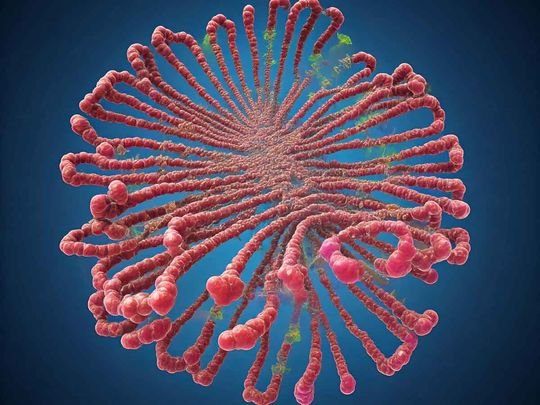
A recent study has shed light on the important role of the p53 gene. It helps in preventing the progression of ulcerative colitis (UC) to colon cancer. According to research conducted by researchers at the Max Delbrück Center and Charité – Universitätsmedizin Berlin, p53 acts as a tumor suppressor in UC patients. It suggests new possibilities for early-stage treatments that could stop cancer from developing. This groundbreaking research was published in the Journal of Science Advances.

The research team was led by Kimberly Hartl. He is a graduate student at the Berlin Institute for Medical Systems Biology. He aimed to understand the function of p53 in the intestines of UC patients. They discovered that in cases of UC, intestinal cells often enter a prolonged state of repair. This repairing phase leads to uncontrolled cell growth. This abnormal behavior can contribute to the increased cancer risk associated with UC. It was linked to a malfunctioning p53 gene. This gene plays a key role in maintaining cellular stability and preventing cancer.

Professor Michael Sigal is a senior author of the study. He stated, “Our findings suggest that by targeting these defective cells early in UC patients, we could potentially stop or slow down cancer progression.”

Advancements in Cellular Modeling and Targeted Therapy

The researchers utilized an innovative 3D organoid model of the colon to replicate the tissue environment of UC patients. They found that cells lacking p53 depend heavily on glucose metabolism through glycolysis. It supports their ongoing growth. In contrast, cells with a functioning p53 gene reduce glucose metabolism. It allows them to return to normal function and curtail excessive cell proliferation.


You Might Also Like

UAE Experts Warn of Severe Dandruff Issues During Winter Season

A Journey of Resilience: UAE’s First Patient to Receive 5-Minute Breast Cancer Injection Shares Her Story of Hope and Recovery

Ferry Sinking Off Basilan Kills 15, Hundreds Rescued in Philippines Maritime Disaster

Sleeping in Your Car? Dubai Police Warns of Deadly Risks and Shares Vital Safety Tips

Car Crashes into Detroit Airport Entrance, Injuring Six People

TAGGED:colon cancerfitnessHealthp53 GeneUlcerative Colitis
Share This Article
Facebook Twitter Email Print
Previous Article UAE Launches Lebanon Education Continuity Project to Address Learning Crisis for Displaced Students
Next Article Dubai’s Business Bay has launched affordable water taxis to provide easy access to important locations.

Popular News

Recent News

  • Tropical Cyclone Basyang Intensifies, Signal No. 1 Raised in Surigao del Sur
  • New Index Ranks Arab Cities’ Creative Power at World Government Summit 2026
  • Kuwait Deports 3,500 Expatriates In Major Crackdown On Residency Violations
  • The Philippine Congress Receives New Impeachment Complaints Against Top Leaders
  • Sharjah Police Foil Document Forgery Plot, Arrest Suspect At Typing Centre
The Arabian News

Quick Links

  • Home
  • Business
  • Real Estate
  • Contact

Featured Categories

  • Real Estate
  • Wellness
  • Politics
  • Economics

Find Us on Socials

© 2024 The Arabian News. All Rights Reserved.
Welcome Back!

Sign in to your account

Username or Email Address
Password

Lost your password?