Introduction
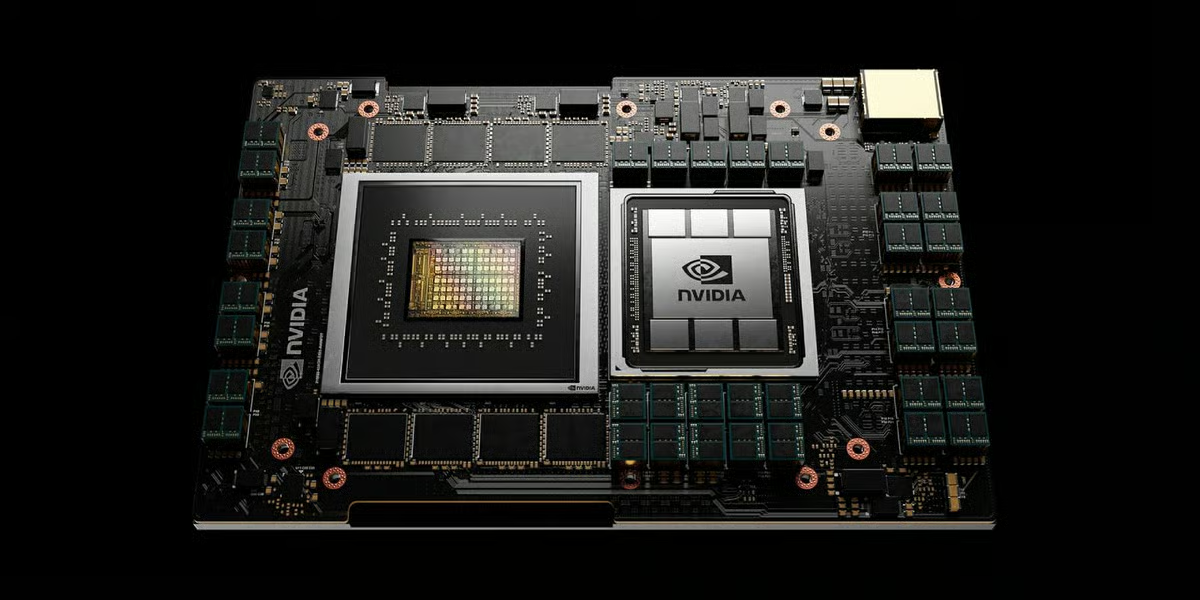
The global AI race depends on powerful chips that train and run modern models. These chips sit at the center of a market now worth more than $400 billion. But experts warn that these chips may be aging too fast. Companies replace expensive hardware every few months to keep up with new model demands. This cycle creates a heavy financial load, even for strong tech giants. It also raises the question of whether the AI boom has a stable base or if it leans on fragile hardware cycles.
Rapid Chip Obsolescence
AI chips once lasted several years. Today, developers replace them after a short time because new models require faster and more efficient processors. Each upgrade demands massive capital. Every new generation becomes more costly. As a result, the industry burns through cash at a pace never seen before. Many analysts call this “accelerated chip aging.” It signals a deeper problem in the AI hardware ecosystem. Companies struggle to balance speed, cost, and long-term value.
 US Economy Tied to AI
Much of the US stock market now rides on the AI wave. Major indexes depend heavily on a few tech companies that build or use AI chips. Investors push money into AI with the hope that growth never slows. This creates fears of an AI bubble. If hardware spending cools or chip production hits delays, the financial impact could spread across several sectors. A slowdown in AI chip supply may also hit cloud companies, startups, and even consumer markets.
GPU Global Supply Chains
GPU makers face intense pressure. Orders continue to rise, but factories cannot expand fast enough. This imbalance keeps prices high. It also slows innovation in smaller AI labs. Many rely on old chips because new models cost too much. The gap between rich companies and small developers widens. This affects competition and may slow AI progress overall. Industry leaders warn that the GPU market cannot support endless demand without a major shift in supply chains.
Possible “AI Overheat”
Economists predict that the rapid hardware cycle may lead to an “AI overheat.” This happens when investment rises faster than realistic long-term value. High spending on fast-aging chips increases risk. If performance gains slow down, investors may pull back. This could trigger a chain reaction. It may hit semiconductor firms, cloud platforms, and AI startups. Experts say the sector needs a more stable path. Sustainable chip lifecycles could reduce risk and support steady growth.
Conclusion
The AI boom remains strong, but the foundation looks uncertain. The industry cannot rely on short-lived chips forever. New technology must offer longer life, better efficiency, and lower cost. Without these improvements, the $400-billion AI hardware market may face serious strain. The world watches closely as AI becomes the core of modern business and global economies. The next phase of AI progress will depend on how the industry manages its most expensive and aging asset.