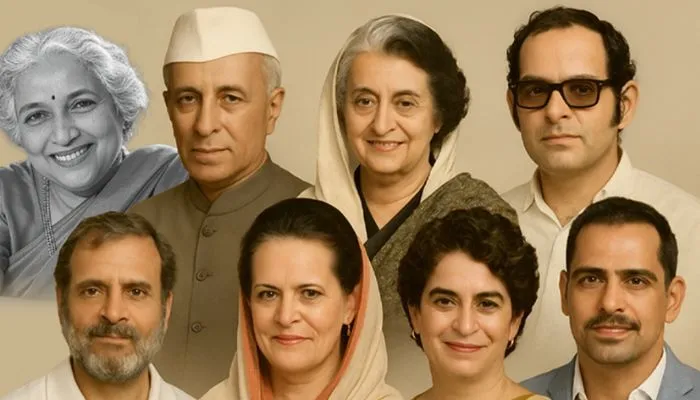
Indian political dynasties
Indian politics operates on a powerful and often unspoken principle. In constituencies and party organizations across the country, family loyalty frequently overrides political ideology. The real glue binding many political groups together is not a shared belief system, but shared bloodlines. This trend is visible from the local municipal elections in Mumbai to the highest levels of national power in Delhi. The system creates enduring dynasties where political office and influence are passed from one generation to the next, raising fundamental questions about meritocracy, representation, and the nature of democratic choice in the world’s largest democracy.
Mumbai’s Civic Polls Showcase Local Family Networks
A clear example of this force is visible in urban local politics. The recent elections for the Municipal Corporation of Greater Mumbai provided a perfect case study. Several key wards saw candidates who were direct relatives of established local politicians. These relatives included sons, daughters, nephews, and wives. These candidates often secured party tickets and won seats, not solely on personal merit, but based on their family name and the existing voter base and support network built by their relative. This pattern ensures that local political fiefdoms remain under the control of the same families for decades, limiting fresh political entry and competition.
National Parties Are Built Around Major Political Families
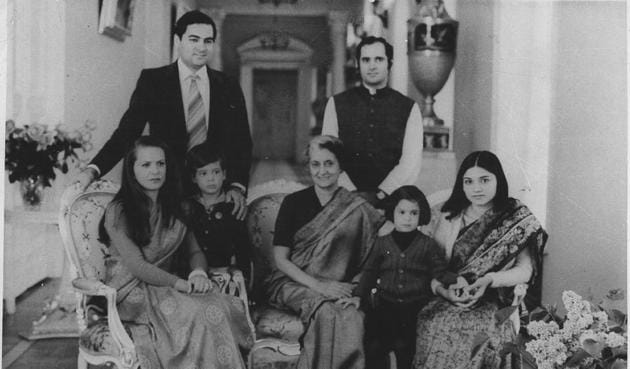
The phenomenon is even more pronounced at the national level. India’s major political parties, across the spectrum, are deeply influenced by dynastic leadership. The Indian National Congress party has been led by the Nehru-Gandhi family for most of its independent history. Regional powerhouses like the Samajwadi Party, Shiv Sena, and DMK are also strongly identified with specific families. These families provide a symbol of continuity and stability for party workers and voters. The party structure itself often becomes loyal to the family, ensuring its control over the organization and its electoral prospects.
Why Voters Consistently Choose Familiar Family Names
A critical question is why Indian voters repeatedly elect members of the same families. Analysts point to several interconnected reasons. For many voters, a familiar family name represents a known quantity and a sense of predictability. These families are often seen as having a long-term “stake” in the constituency. They have built durable networks of patronage and support over years. In a landscape with weak local institutions, voters may see a powerful family as their most reliable bridge to government resources and problem-solving, valuing immediate tangible benefits over abstract ideological purity.
The BJP’s Contrasting Stance on Political Dynasties
The Bharatiya Janata Party (BJP) has historically presented itself as an exception to this dynastic rule. Prime Minister Narendra Modi often highlights his own humble, non-political family background. The party criticizes rivals like the Congress for their dynastic culture. This stance forms a key part of its political messaging. However, critics note that dynastic politics also exists within the BJP and among its allies, particularly at the state level. The party’s anti-dynasty rhetoric remains a powerful electoral tool, even as the reality on the ground may be more complex, highlighting a tension between ideology and political practicality.
The Impact on Policy, Ideology, and Political Innovation
The dominance of family politics has significant consequences for governance. It can sideline competent leaders who lack a political pedigree. Internal party debate and ideological renewal may be stifled to maintain family control. Policy-making can become focused on preserving the family’s power and interests rather than on bold, new ideas for development. This system risks creating a closed political class, where access is limited by birth rather than talent or public service, potentially draining the political system of innovation and diverse perspectives needed to address complex national challenges.
Is Change Possible in India’s Dynastic Democracy?
Despite its deep roots, challenges to dynastic politics are emerging. A more educated and urban electorate is asking new questions. Anti-corruption movements and smaller parties sometimes rally against old-family dominance. The BJP’s electoral success, partly built on its anti-dynasty narrative, shows there is voter appetite for an alternative model. However, the sheer organizational and financial advantage of established political families makes them incredibly resilient. The future will likely see a continued struggle between the powerful force of dynasty and the democratic desire for broader representation and merit-based leadership in India’s vibrant and complex political arena.