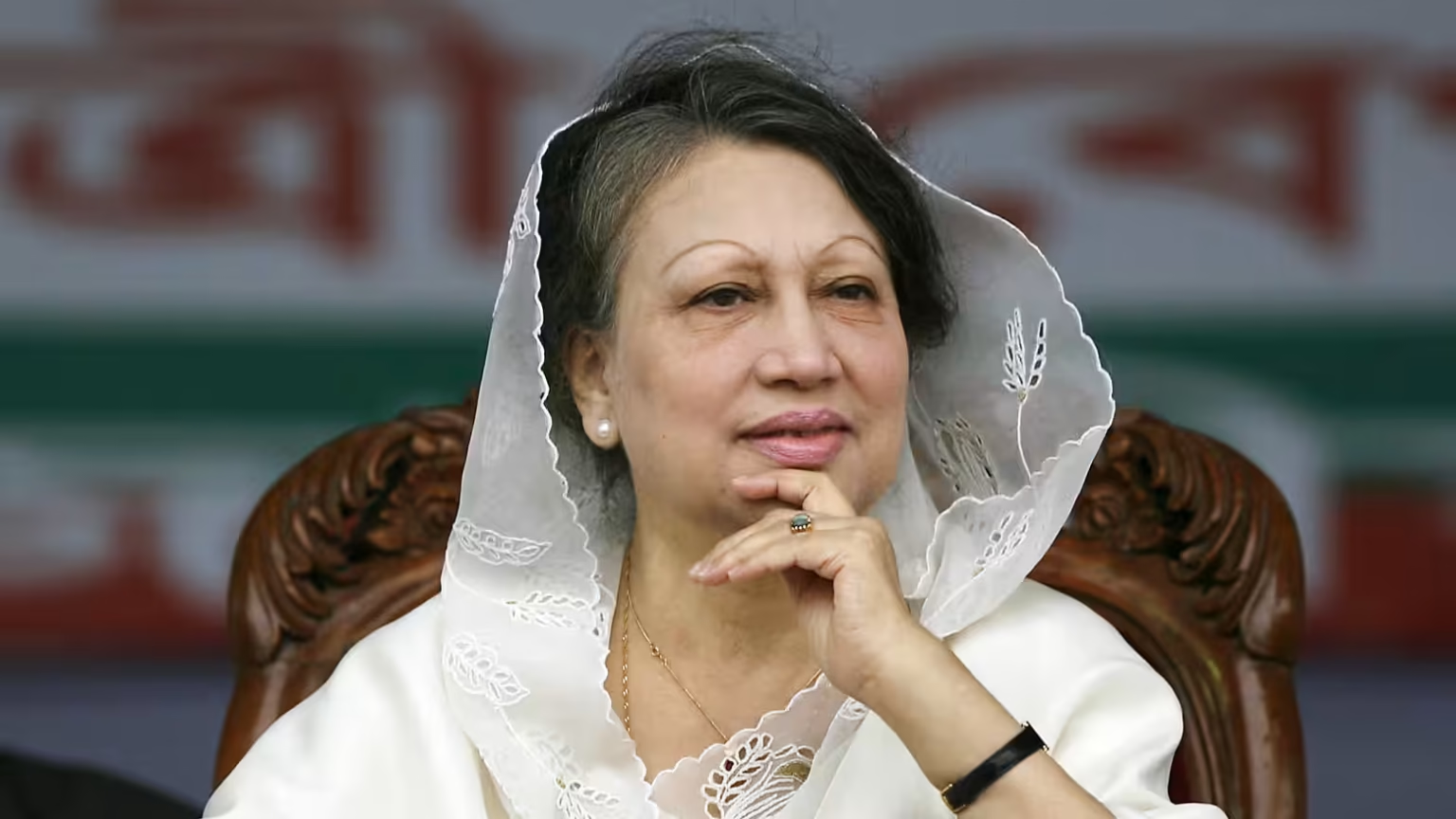
Khaleda Zia died
Bangladesh has lost one of its most significant and controversial political figures. Khaleda Zia, the former Prime Minister of Bangladesh, passed away at the age of 80. Zia was the first woman to be elected as the head of government in the nation’s history. She served as Prime Minister for three separate terms. Her life and career were inextricably defined by her decades-long, fierce political rivalry with Sheikh Hasina, the current Prime Minister. This rivalry shaped the South Asian nation’s turbulent democracy for over thirty years, creating a political landscape dominated by their two powerful families and their opposing visions for the country’s future.
A Political Journey Forged in Personal Tragedy
Khaleda Zia’s entry into politics was not by her own initial design. She was the widow of President Ziaur Rahman, a military leader who became president and was later assassinated in 1981. After his death, she entered the political arena to lead the Bangladesh Nationalist Party (BNP), which he had founded. She transformed from a reluctant political figure into a formidable and charismatic leader in her own right. She channeled public sympathy for her husband’s legacy into a powerful political movement that challenged the existing establishment, building a vast and loyal support base that saw her as the guardian of her husband’s political ideals.
Historic Achievement as the Nation’s First Female Premier
Khaleda Zia made history in 1991. She led her Bangladesh Nationalist Party (BNP) to victory in the general election. This win made her the first woman to be elected as the Prime Minister of Bangladesh. Her rise to the highest office broke a major gender barrier in the predominantly Muslim country. It demonstrated a significant shift in the nation’s political culture. Her tenure focused on economic liberalization and strengthening ties with Middle Eastern and Western nations, setting policy directions that continue to influence the country today and inspiring a complex debate about women’s leadership in South Asian politics.
The Defining Rivalry with Sheikh Hasina Wazed
The central narrative of modern Bangladeshi politics is the intense feud between Khaleda Zia and Sheikh Hasina. Hasina is the daughter of Bangladesh’s founding father, Sheikh Mujibur Rahman. The two women led the country’s two major political parties. Their conflict was deeply personal, ideological, and often violent. It polarized the nation. Supporters of each leader were fiercely loyal. This rivalry led to frequent nationwide strikes, political deadlock, and accusations of corruption and authoritarianism from both sides, creating a cycle of confrontation that hampered governance and development for generations.

Later Years Marred by Legal Troubles and Illness
Khaleda Zia’s later life was marked by a dramatic fall from power. After her last term ended in 2006, she faced serious legal challenges. She was convicted on multiple corruption charges in 2018. These convictions, which she and her supporters denounced as politically motivated, disqualified her from running for office. She was sentenced to prison. Due to her age and declining health, she was later allowed to serve her sentence under house arrest in Dhaka. Her health deteriorated significantly in recent years, keeping her out of the public eye but never out of the nation’s political consciousness.
Reactions Pour In from Bangladesh and the World
News of her death has triggered an outpouring of reactions. Leaders from across South Asia and the world have offered condolences. Within Bangladesh, the response is deeply divided along political lines. Her supporters mourn the loss of a beloved leader and a symbol of resistance. Members of the ruling party acknowledge her passing as the end of an era. The government has announced a state of mourning, recognizing her former status as prime minister. This formal recognition highlights the complex and enduring nature of her role in the nation’s history, which even her staunchest opponents cannot erase.
A Complicated Legacy in a Divided Nation
Khaleda Zia leaves behind a complicated and powerful legacy. To her millions of followers, she was “Khaleda Apa” (Sister Khaleda), a tireless champion of the poor and a defender of democracy against what they saw as autocratic rule. To her critics, she represented a corrupt political dynasty that fostered violence and division. Historians will debate her impact for decades. However, her role as a pioneering female leader and as one half of the duo that dominated Bangladeshi politics for a generation is undeniable. Her death closes a major chapter in the nation’s story, leaving questions about the future of the opposition and the country’s political direction.