Introduction
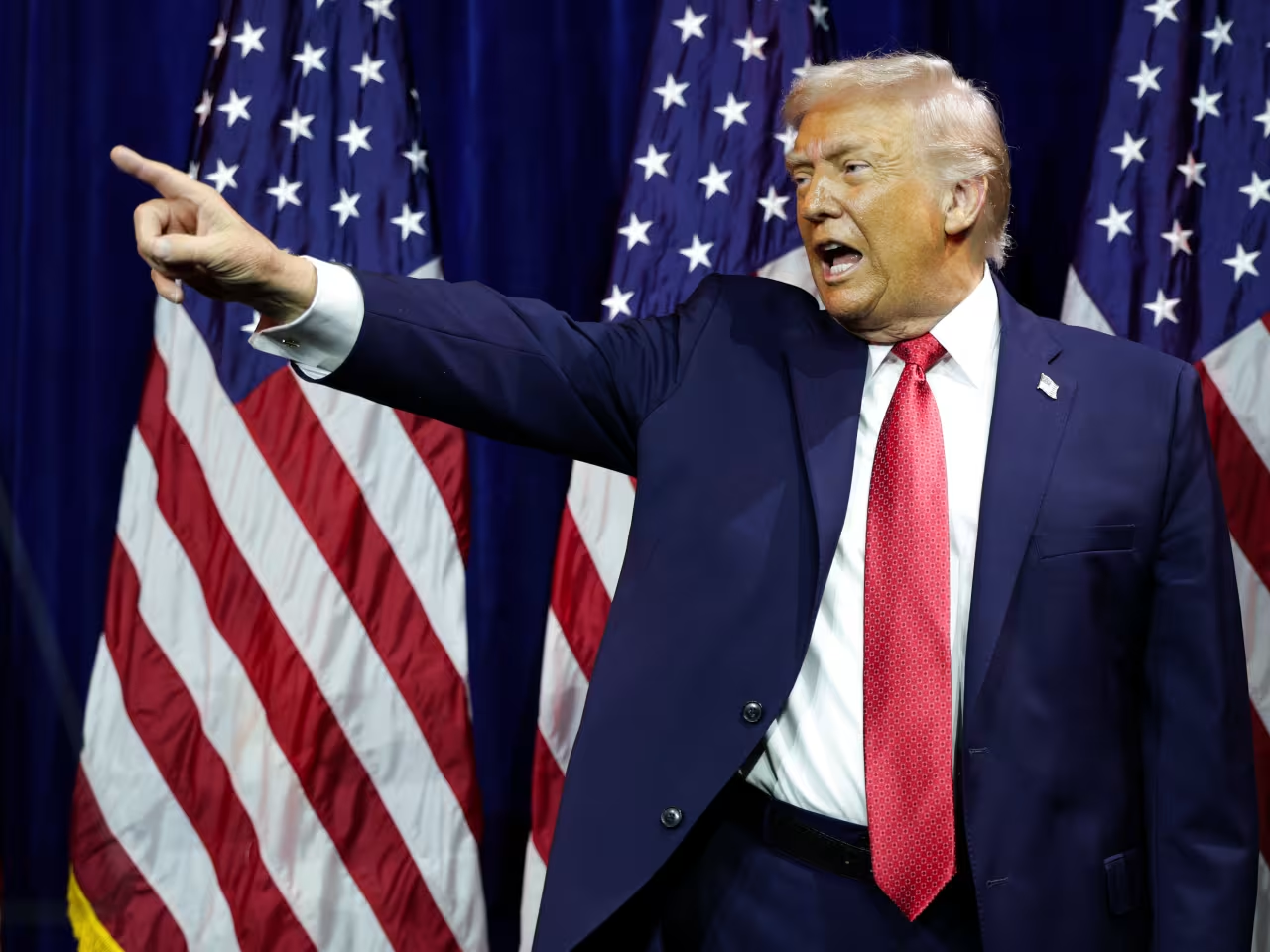
Former President Donald Trump has made a stunning announcement. He says Venezuela has agreed to turn over up to 50 million barrels of oil to the United States. Trump stated the deal is with Venezuela’s US-recognized interim government. He added a controversial detail: the proceeds from this massive oil transfer “will be controlled by me.”
This claim immediately raises major questions about diplomacy, energy, and legality. Venezuela sits on the world’s largest oil reserves but produces very little due to economic collapse and sanctions. A deal of this scale could shake global oil markets. Trump’s statement about personal control of funds adds an unprecedented layer to the proposal. Experts are scrambling to understand the mechanics and legitimacy of such an arrangement.
The Announcement at a Campaign Rally
Donald Trump revealed the deal during a recent campaign speech. He framed it as a masterstroke of foreign policy and energy negotiation. Trump said the agreement was reached with the “interim government” of Venezuela. This refers to the opposition faction led by Juan Guaidó. The United States has recognized Guaidó as Venezuela’s legitimate president since 2019. However, Nicolás Maduro remains the de facto ruler in Caracas, controlling the military, police, and state oil company PDVSA.
The Immense Scale of 50 Million Barrels
Fifty million barrels of oil is an enormous quantity. It represents about two and a half days of total oil consumption for the entire United States. For Venezuela, it would equal roughly 100 days of its current crippled production levels. Moving this much oil would require a fleet of over 50 very large crude carriers (VLCCs). The logistical challenge is immense, especially with Venezuela’s decaying port infrastructure. The financial value at current prices would be well over $3 billion.
 The Critical Question of Who Controls Venezuela’s Oil
The core problem with Trump’s claim is control. Venezuela’s oil is legally owned and operated by PDVSA, the state-owned company. PDVSA remains firmly under the control of the Maduro regime. The Guaidó-led interim government has no physical access to oil fields, ports, or tankers. It cannot legally sign contracts to sell state assets. Any deal would require the cooperation of the Maduro government or a successful military coup, neither of which appears imminent.
Legal and Ethical Firestorm Over “Control By Me”
Trump’s statement that he would personally control the proceeds has ignited a firestorm. Legal experts question its constitutionality. A private citizen, even a former president, cannot legally control billions in funds from a foreign state. Such transactions typically flow through the US Treasury or designated federal accounts. The comment suggests a blurring of lines between US national interests and personal financial control. Critics call it a dangerous precedent that could violate the Emoluments Clause.
Potential Motives and Strategic Implications
Analysts are debating the true motives behind the announcement. It could be a political gambit to show strength on energy and foreign policy ahead of an election. It might also be a pressure tactic against the Maduro regime, suggesting the US will work with opposition forces to monetize Venezuela’s oil. Strategically, securing 50 million barrels from Venezuela would slightly reduce US reliance on Middle Eastern oil. It could also provide leverage in global price negotiations with OPEC+ members.
Global Reactions and Market Impact
Global reactions have been muted but skeptical. The Maduro government has not issued an official response but would certainly reject any deal not made through its channels. US allies in Europe and Latin America are likely confused by the unconventional diplomacy. Oil markets showed little immediate price movement, indicating traders doubt the deal’s feasibility. A genuine transfer of this size would temporarily lower global prices, benefiting oil-importing nations but hurting producers like Saudi Arabia and Russia.
The Reality Check: Is This Deal Even Possible?
Most energy and political analysts consider the deal highly improbable in the near term. The logistical, legal, and political barriers are simply too high. The US would need to dramatically ease sanctions on PDVSA for any oil to be sold internationally. The Maduro government would have to agree to hand over resources to its political enemies. Courts would likely block any arrangement where proceeds bypass the US Treasury. While the announcement dominates headlines, the path to actual barrels leaving Venezuelan ports remains blocked.