US intervention Venezuela
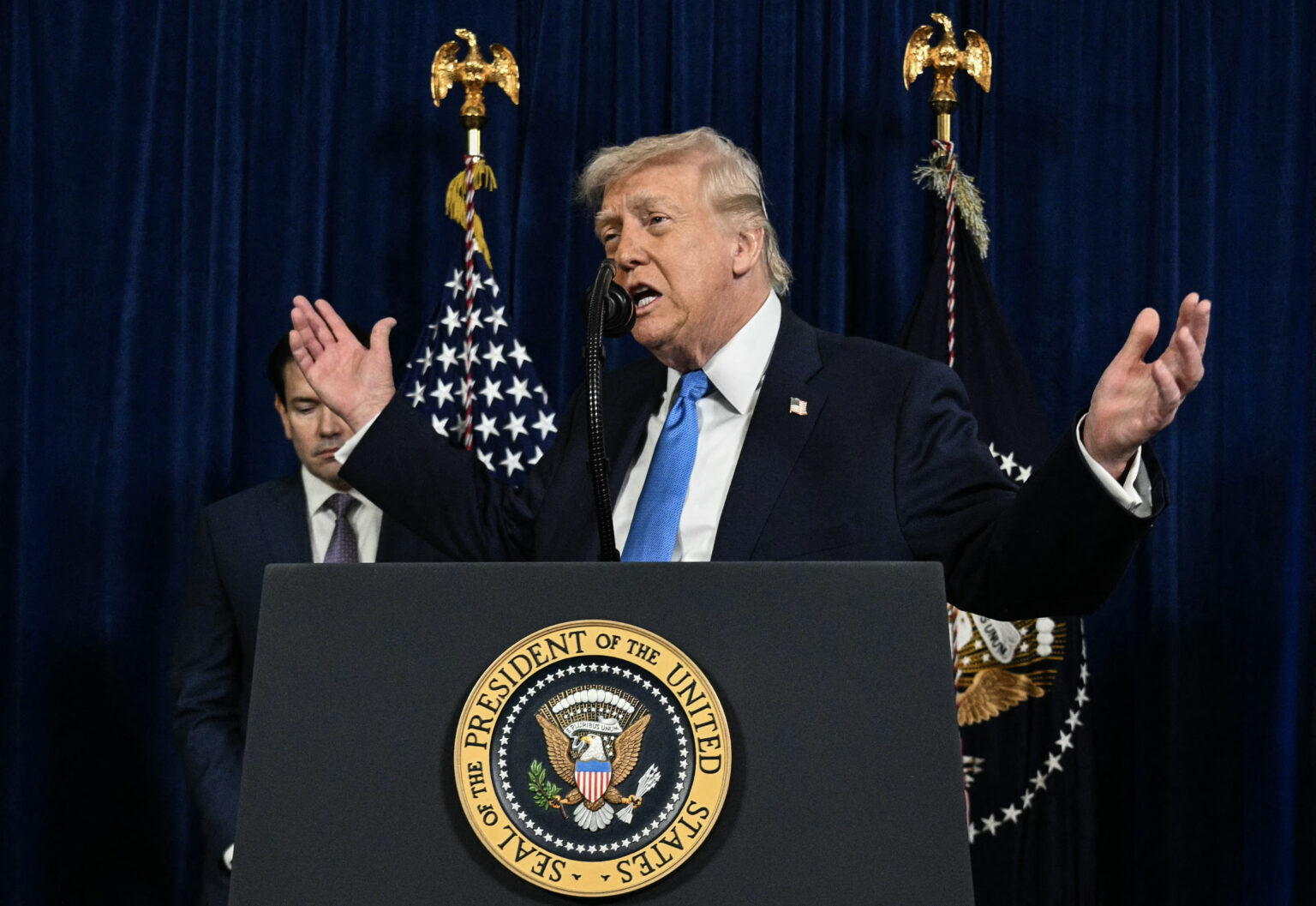
In a statement with far-reaching implications, former President Donald Trump has outlined an aggressive vision for US involvement in Venezuela. He declared that the United States “will run” the country following any military or political action to remove President Nicolas Maduro. Trump stated this control would last only until a “safe” political transition can be guaranteed. He further escalated the rhetoric by warning that the US is prepared to launch a “second strike” against Venezuelan targets if necessary. These comments represent the most direct articulation of a potential US intent to assume temporary governing authority in a foreign nation since the Iraq War, signaling a dramatic and confrontational approach to the long-standing political crisis.
Defining a “Safe” Transition Under US Administration
The central and ambiguous term in Trump’s statement is “safe transition.” This phrase suggests the US would not immediately hand power to the Venezuelan opposition or call for instant elections. Instead, it implies a period of direct US oversight. A “safe” transition likely means preventing chaos, securing oil facilities, disarming militias, and ensuring no elements of the former Maduro government can retake power. It could involve installing a provisional US-led authority to manage day-to-day governance. The goal would be to stabilize the country before organizing elections and transferring power to a new Venezuelan government. This model draws direct parallels to the Coalition Provisional Authority in post-invasion Iraq.
The Threat of a “Second Strike” and Military Escalation
The warning of a “second strike” introduces a severe new dimension to the crisis. It implies that an initial US military operation is not just possible but planned. A “second strike” suggests a follow-up action if the first fails to achieve its objectives or if residual forces resist. This language is typically used in nuclear deterrence, making its application here particularly stark. It signals a willingness to use sustained, repeated military force to subdue Venezuela. This threat is likely aimed at deterring the Venezuelan military from putting up a strong defense, warning that resistance would be met with overwhelming and continued attacks, raising the stakes for all parties involved.
The Legal and Sovereignty Nightmare of US-Run Governance
The proposition that the US would “run” Venezuela triggers immense legal and ethical problems. It would constitute a foreign occupation, a clear violation of the United Nations Charter which prohibits the threat or use of force against a nation’s territorial integrity. No international body has authorized such a move. It would strip Venezuela of its sovereignty, treating it as a failed state or a protectorate. Domestically in the US, it would require a Congressional debate over war powers and nation-building. The plan faces almost universal condemnation from international law experts and would isolate the US diplomatically, drawing comparisons to 20th-century imperialism.
Logistical Challenges of Governing a Nation of 30 Million
The practical task of running Venezuela is staggering. The country has a population of over 30 million people facing a profound humanitarian crisis. A US administration would instantly become responsible for food distribution, restoring electricity and water, managing hyperinflation, and providing basic security. It would need to oversee a civil service and rebuild an economy utterly dependent on a single commodity. This nation-building effort would require hundreds of thousands of troops and civilian administrators, costing hundreds of billions of dollars. History shows such projects are fraught with insurgency, corruption, and unintended consequences, often creating more instability than they resolve.
Reactions from Latin America and Global Powers
The reaction from the rest of Latin America will be one of unified horror and rejection. Regardless of their views on Maduro, regional nations will see this as an unacceptable return to gunboat diplomacy and a violation of the principle of non-intervention. Brazil, Mexico, Colombia, and Argentina would likely lead diplomatic efforts to block it at the Organization of American States and the UN. Global powers like Russia and China, which have economic and military ties to Venezuela, would fiercely oppose the move. They could respond with their own escalations, such as increasing military aid to Maduro or taking asymmetric actions elsewhere in the world, potentially triggering a broader geopolitical confrontation.
The Stated Goal vs. The Likely Outcome
The stated goal is a “safe transition” to democracy. However, the likely outcome of a US invasion and occupation would be profoundly different. It would almost certainly trigger a brutal, protracted guerrilla war from loyalist military units and armed collectives. It could fracture the country, inspiring separatist movements. The humanitarian crisis would worsen dramatically as supply lines are cut. Anti-American sentiment would surge across Latin America, damaging US interests for a generation. The occupation could become a quagmire, draining US resources and political will without ever achieving the promised “safe” outcome, leaving Venezuela more broken and dangerous than before the intervention.
A Declaration That Redefines the Crisis
Donald Trump’s statement is more than a policy suggestion; it is a declaration that redefines the entire Venezuela crisis. It moves the discussion from diplomacy and sanctions to explicit regime change and military occupation. It presents the world with a stark choice: accept a future where a major power asserts the right to “run” a sovereign neighbor, or mobilize every diplomatic and legal tool to prevent it. The announcement ensures that Venezuela will remain at the top of the global agenda, but now as a potential flashpoint for a major international conflict rather than a regional political and humanitarian challenge, marking a dangerous new chapter in hemispheric relations.