Venezuela election news
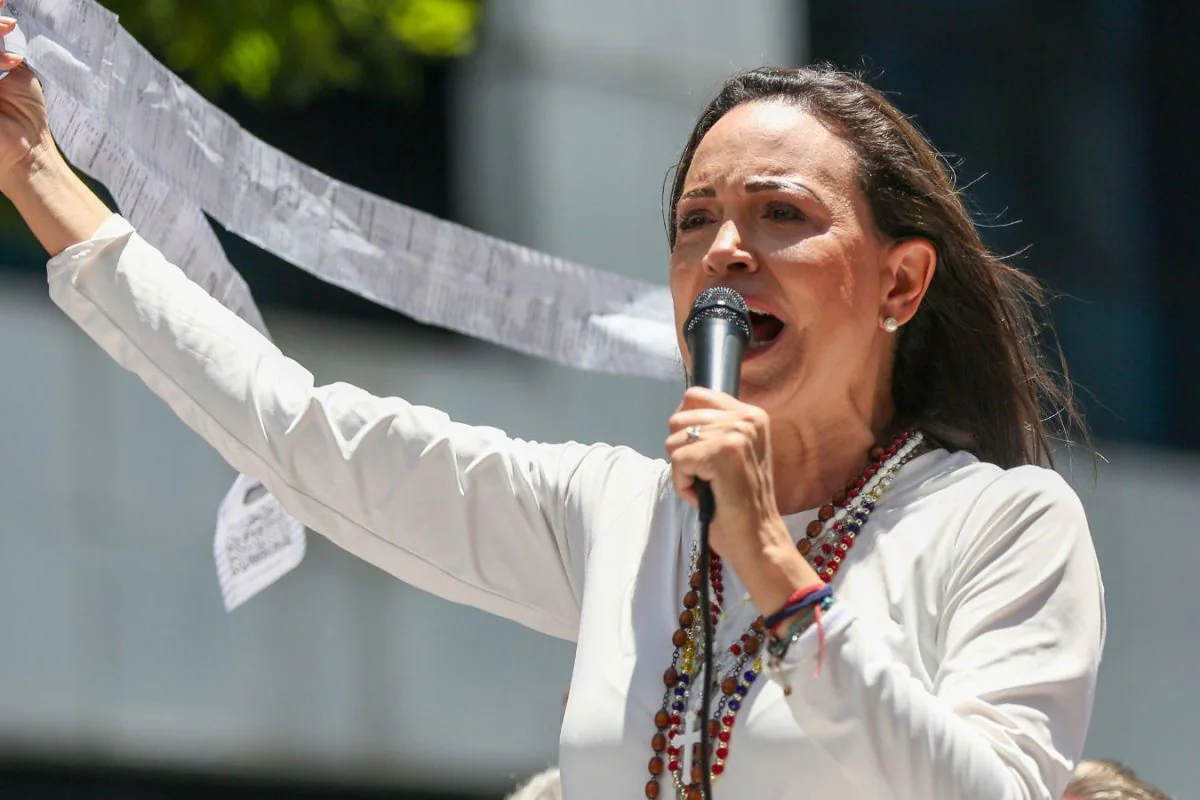
Former United States President Donald Trump has made a significant statement on the political crisis in Venezuela. He commented directly on the potential presidential candidacy of prominent opposition leader Maria Corina Machado. Trump stated that Machado, a Nobel laureate, does not possess the necessary “support or respect” within Venezuela to successfully run the country. In the same remarks, he revealed that the current US administration is choosing to engage and work directly with the Vice President of Nicolas Maduro’s government, rather than with Machado’s opposition faction. This perspective adds a major new dimension to the international dialogue surrounding Venezuela’s future, suggesting a potential strategic shift in US approach under a possible new administration.
Trump Questions Machado’s Political Viability and Base
The core of Trump’s critique focused on Machado’s domestic standing. He publicly doubted her level of popular support and political respect among the Venezuelan people. This challenges the narrative that Machado is the universally recognized leader of the democratic opposition. Trump’s assessment implies he views her as an ineffective or unpopular figure who cannot unify the country or command its institutions. For Machado’s supporters, this statement is a damaging external critique. For the Maduro government, it may be seen as validation of their own claims that the opposition lacks a legitimate mandate, influencing both domestic perception and international opinion.
US Engagement Shifts Focus to Maduro’s Vice President
A key revelation in Trump’s comments was a shift in US diplomatic contact. He indicated that American officials are now actively working with the Vice President serving under incumbent President Nicolas Maduro. This represents a notable tactical change. For years, US policy officially supported the opposition and recognized its leadership. Engaging with Maduro’s VP suggests a potential move toward pragmatic negotiations with the existing government structure. It could be an attempt to find a workable solution through channels of power that are currently in control, even if that means dealing with figures closely associated with the ruling party.
The Complex Profile of Opposition Leader Maria Corina Machado
Maria Corina Machado is a central but controversial figure. She is an economist, former legislator, and a recipient of the Nobel Peace Prize for her human rights advocacy. She leads a major coalition of opposition parties united against President Maduro. However, she has also been banned by Venezuelan courts from holding public office. Her supporters call the ban politically motivated. Her critics question her political strategies and alliances. Trump’s comments inject a new external critique into this already complex domestic profile, potentially affecting her standing both at home and among international allies who may reconsider their support based on this assessment.
Analyzing the Potential Implications for US-Venezuela Relations
Trump’s statements could signal a profound shift in US strategy if he were to return to power. It moves away from the policy of maximum pressure and isolation of the Maduro regime that he previously enforced. Instead, it hints at a more transactional, deal-oriented approach. This might involve negotiating directly with figures in power for concessions on oil, migration, or political prisoners. However, this approach risks alienating the democratic opposition entirely. It could be seen as abandoning the cause of free elections and legitimizing Maduro’s government in exchange for short-term stability or economic interests, fundamentally redefining the US-Venezuela relationship.
Reactions from Caracas and the International Community
Reactions to Trump’s comments will be sharply divided. The Maduro government will likely welcome any statement that undermines its chief political rival. They may use it to argue that even US figures recognize the opposition’s weakness. Machado’s opposition coalition will condemn the remarks as irresponsible and destructive to the democratic cause. European and Latin American allies who support a negotiated democratic solution may express concern. They might worry that undermining the unified opposition weakens the chances for free and fair elections, creating confusion and potentially fracturing the international consensus on how to address the Venezuela crisis.

The Long-Standing Political and Humanitarian Crisis in Venezuela
This new development occurs within a devastating ongoing crisis. Venezuela suffers from hyperinflation, severe shortages of food and medicine, and massive outward migration. The political standoff between Maduro’s socialist government and the US-backed opposition has lasted for over a decade. Multiple attempts at dialogue and negotiations have failed to produce a lasting solution. The humanitarian suffering continues for millions of citizens caught in the middle of the power struggle. Any shift in the international approach carries high stakes for their daily lives and the country’s future stability, making every political statement a matter of urgent consequence.
Uncertainty Defines the Path Forward for Venezuela
Trump’s comments create fresh uncertainty. They challenge the established international playbook for dealing with Venezuela. It is unclear if this represents a fully formed policy or a negotiating posture. The ultimate impact depends on whether Trump returns to the White House and implements this vision. For now, it adds a new layer of complexity to an already intractable situation. It forces all actors—the Maduro government, the opposition, and international players—to reconsider their strategies and assumptions about the possible endgames for Venezuela’s prolonged political and economic tragedy, leaving the future more unpredictable than ever.