Trump Greenland Push
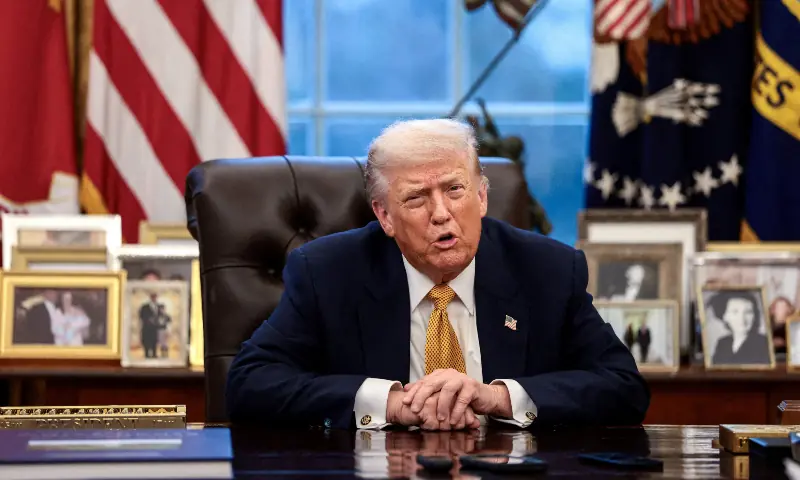
Former President Donald Trump made a significant statement about his goals. He said he is not thinking “purely of peace” regarding his push for Greenland. This comment reveals a strategic and aggressive approach to the issue. It directly links territorial ambition with a willingness to create conflict. At the same time, major European leaders are forcefully responding to his other threats. The German and French leaders have jointly denounced Trump’s tariff threats. They have labeled his tactics as nothing less than “blackmail.” These parallel crises are creating the most severe transatlantic rift in decades, challenging the very foundation of post-war alliances.
Trump’s Revealing Comment on Greenland Strategy
Donald Trump explained his thinking in a recent interview. He was discussing his persistent campaign to acquire Greenland from Denmark. He stated clearly that he is not considering the matter “purely from the perspective of peace.” This phrasing suggests other factors are in play. These factors could include military strategy, economic pressure, or geopolitical competition. The comment moves the issue beyond a simple real estate deal. It frames it as part of a broader power struggle where peaceful diplomacy is not the only tool on the table, alarming allies who value stability and international law.
Germany and France Issue a Unified Condemnation
Chancellor of Germany and the President of France gave a joint statement. They addressed Trump’s threats to impose massive new tariffs on European goods. The leaders used exceptionally strong language. They called the threats an act of “blackmail.” This word indicates coercion and unfair pressure. It shows that Europe views the tactics as hostile and illegitimate. The unified stand from Berlin and Paris is critically important. It signals that Europe’s two most powerful nations will not be intimidated or divided by such economic threats, marking a new era of European defiance.
Connecting Greenland Ambitions to Trade Warfare
Analysts see a clear connection between the two crises. The Greenland push and the tariff threats are part of a single strategy. This strategy uses pressure on multiple fronts to gain advantage. It targets European unity and sovereignty. The goal may be to force concessions on trade or security issues. By showing he is not “purely” peaceful on Greenland, Trump adds pressure on Denmark and NATO. The tariffs then pressure the larger European economy. This two-pronged approach seeks to overwhelm and fracture European resolve through simultaneous challenges.

The Geopolitical Stakes in the Arctic Region
Greenland is the central prize in this high-stakes game. The island’s location in the Arctic is becoming strategically vital. Melting ice is opening new shipping routes and revealing mineral resources. Control of Greenland would give a nation huge influence in the region. Trump’s comment confirms that the United States views this as a strategic competition, not a friendly discussion. Other powers like Russia and China are also active there. This turns the Arctic into a potential zone of conflict, with Greenland as a key piece on the global chessboard.
Europe’s Path to Strategic and Economic Autonomy
The European response is now accelerating a historic shift. Leaders are openly discussing the need for “strategic autonomy.” This means building Europe’s own capacity to defend its interests. It involves less dependence on the United States for security and trade. The “blackmail” accusation is a turning point. It justifies major new investments in European defense industries and trade protections. The crisis is forcing Europe to unite and plan for a future where America is not a reliable partner but a volatile competitor, reshaping decades of foreign policy.
Immediate Risks for Global Trade and Security
The current situation creates immediate dangers for the world. A major trade war between the US and Europe would hurt the global economy. It would increase prices and slow down growth for everyone. Security cooperation within NATO could also break down. Trust between allies is already damaged. This makes coordinated responses to real global threats much harder. The instability benefits other rivals who wish to see the Western alliance weakened. The next few months require careful diplomacy to prevent a permanent and damaging split.
A Defining Moment for the West
We are witnessing a defining moment for the Western world. The traditional alliance is under unprecedented strain. One side openly discusses goals beyond peace and uses economic blackmail. The other side now openly resists and accuses its partner of coercion. The outcome will shape international relations for a generation. Will the transatlantic partnership survive this pressure? Can Europe establish itself as an independent power? The answers will determine the balance of power in the 21st century, moving from a world of allies to a world of negotiated interests.
The statements from Trump and the European leaders have removed all pretence. The conflict is now open and acknowledged by both sides. The United States is pursuing a hard-nosed strategy involving territory and trade. Europe is collectively rejecting this as blackmail and building its own defenses. The idea of a peaceful Atlantic partnership seems to be fading. In its place is a new reality of confrontation and calculated power. The world is watching as these long-time friends navigate a dangerous and historic break, with consequences for global order, trade, and peace.