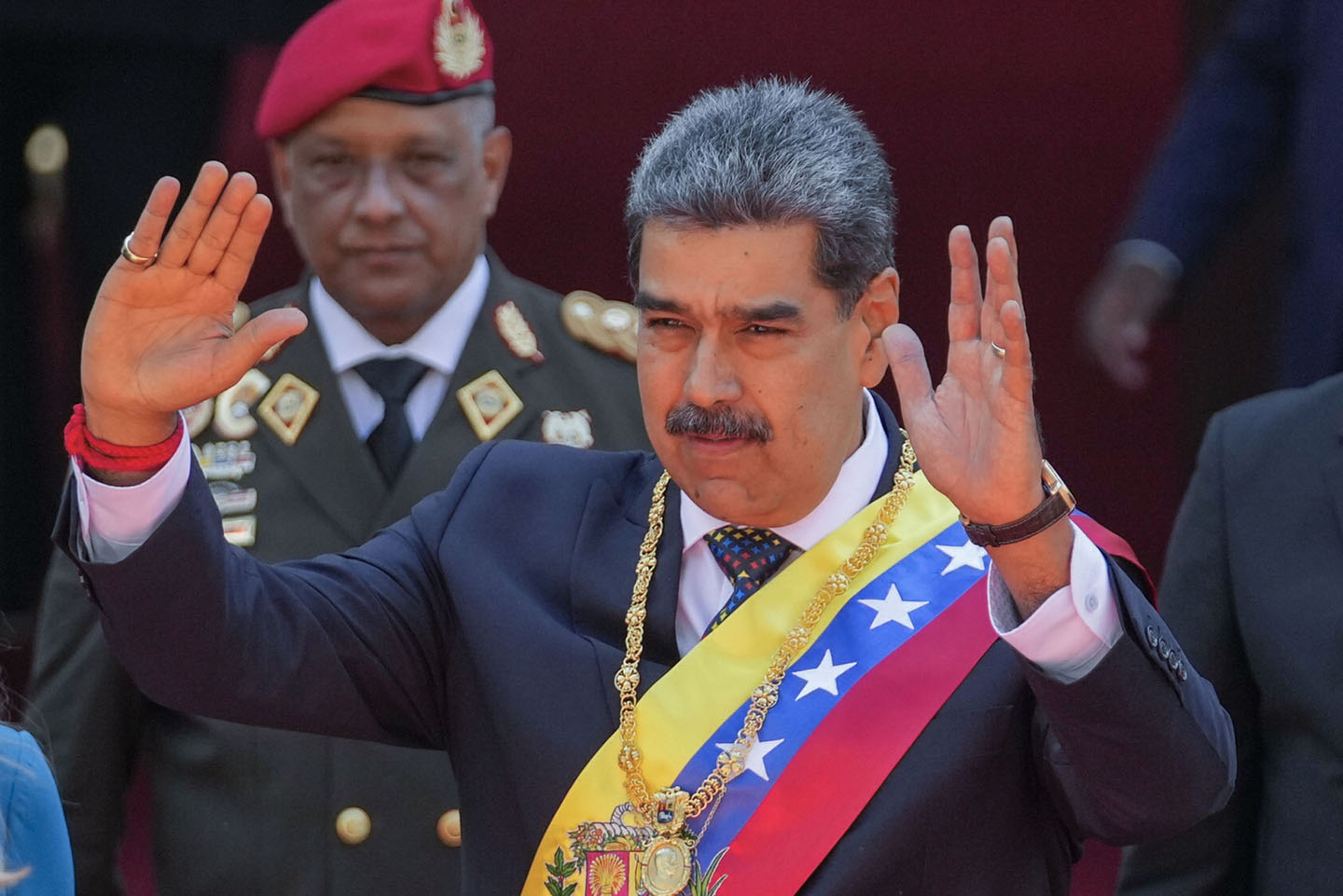
The United States government has formally defined a recent, world-shaking event. Authorities have characterized the arrest of Venezuelan President Nicolas Maduro as a “law enforcement action.” This official description comes directly from statements by former President Donald Trump and current US officials. They argue the operation was a narrowly targeted mission to apprehend a criminally indicted individual. They explicitly state it was not an act of war against Venezuela or its people. This legal framing is a crucial attempt to manage the global fallout and justify an unprecedented cross-border military operation to detain a sitting head of state, positioning it as a police action rather than a military invasion.
Defining a ‘Law Enforcement Action’ in an International Context
The term “law enforcement action” is typically used for domestic police activities. Applying it internationally is highly unusual and controversial. The US argument rests on existing US law. A US court had previously indicted Nicolas Maduro on serious charges including narcoterrorism and money laundering. The US views him as a fugitive from justice. Therefore, they frame the mission to capture him as similar to extraditing a criminal from another country, albeit using military special forces instead of police and diplomatic channels. This legal theory attempts to bypass the UN Charter’s prohibition on the use of force against another state’s sovereignty, creating a new precedent for international intervention.
The Argument for a ‘Narrowly Targeted’ Operation
Former President Trump emphasized the operation’s precise nature. He stated the goal was solely to capture Maduro and a small number of his top associates named in indictments. It was not designed to topple the entire Venezuelan government, occupy the country, or engage the Venezuelan military in full-scale combat. The use of special forces, rather than a large invading army, supports this claim of surgical precision. The US argues it minimized collateral damage and civilian casualties. This narrative aims to distinguish the operation from the large-scale invasions of Iraq or Afghanistan, presenting it as a tactical police raid on a grand, international scale with limited objectives.
 Why the US Insists This Is ‘Not War’
The insistence that this is “not war” is a critical diplomatic and legal distinction. Declaring war has specific, grave consequences under international and US domestic law. It triggers wartime authorities, justifies broader destruction, and often leads to prolonged occupation. By calling it a law enforcement action, the US seeks to avoid these implications. It allows them to argue that the normal rules of interstate conflict do not apply. It also aims to reassure other nations, especially in Latin America, that the US is not embarking on a new campaign of regional military conquest, but is merely executing a court order against a specific criminal syndicate led by Maduro.
Immediate Global Reactions: Skepticism and Outrage
The international reaction has been overwhelmingly skeptical and, in many quarters, outraged. Most nations, including US allies in Europe, have rejected the US legal framing. They argue that sending military commandos into another country’s capital to kidnap its president is, by definition, an act of war and a blatant violation of the Vienna Convention on diplomatic relations. The United Nations Secretary-General has expressed deep concern. Regional bodies like the Organization of American States (OAS) are sharply divided. Only a handful of nations have expressed support for the US position. This global pushback threatens to isolate the US diplomatically and undermines the credibility of its “law enforcement” narrative.
Legal Precedents and the Slippery Slope of Extraterritorial Arrest
The operation sets a dangerous and potentially destabilizing international precedent. If the US can militarily arrest a foreign leader it has indicted, what stops other powerful countries from doing the same? Could China send troops to arrest a Taiwanese leader? Could Russia seize a Baltic states’ president? Legal scholars warn this moves the world toward a system of “might makes right,” where powerful nations enforce their domestic laws anywhere on the globe through military force. It erodes the foundational principle of sovereign equality among nations and could lead to a new era of international vigilantism and conflict under the guise of law enforcement.
The Path Ahead: Trials, Legitimacy, and Venezuelan Sovereignty
The immediate future involves complex legal and political battles. The US plans to put Maduro on trial in a federal court. This trial will be denounced as illegitimate by much of the world, seen as “victor’s justice.” In Venezuela, the situation is chaotic. The constitution outlines a succession plan, but the US action has thrown the government into crisis. Who holds legitimate power is now an open question. The US likely hopes a new, friendly government will form and request American help, retroactively legitimizing the operation. However, the more likely outcome is a protracted power struggle, with anti-US factions gaining strength and the country descending further into instability, making the “law enforcement” action look more like the start of a new war than its conclusion.