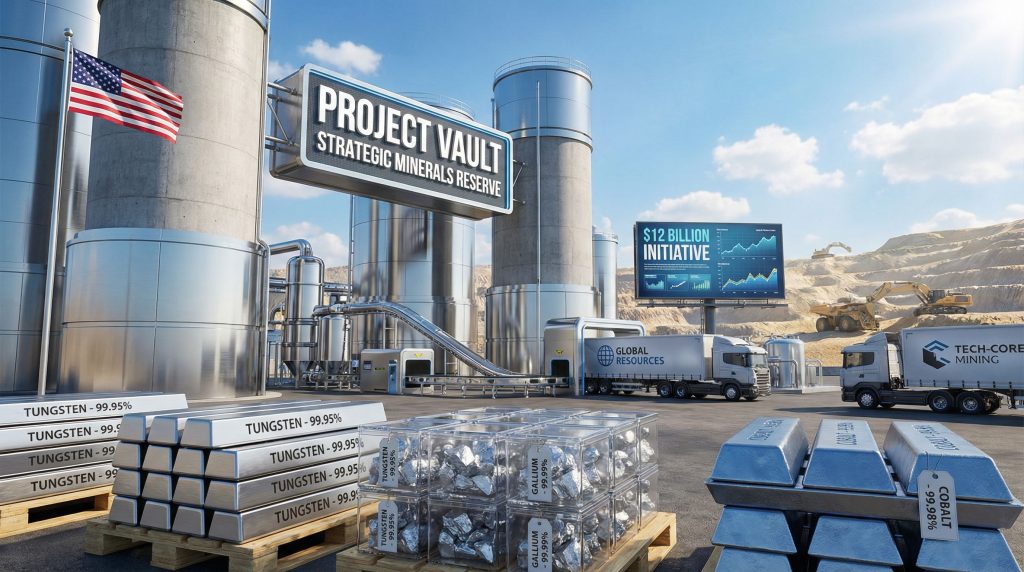
First Civilian Strategic Minerals Reserve
The US government has officially launched a major new national security program called ‘Project Vault’. Its formal name is the Strategic Critical Minerals Reserve. This project creates the first-ever civilian stockpile of critical minerals for the United States. These minerals are essential for modern technology, defense systems, and clean energy. The reserve aims to protect the country from supply chain disruptions. It ensures American industries and the military have access to vital materials even during a global crisis or trade dispute. This move is a direct response to concerns about relying on other countries for these key resources.
Project Vault Is Designed To Secure The Mineral Supply Chain
The primary goal of Project Vault is to strengthen US economic and national security. Modern life depends on minerals like lithium, cobalt, rare earth elements, and graphite. These are used in everything from electric car batteries and smartphones to fighter jets and satellites. Currently, the processing and supply of many of these minerals are controlled by a small number of nations, notably China. Project Vault establishes a government-owned backup supply. This reduces the risk if foreign supplies are suddenly cut off or become too expensive.
The Reserve Will Stockpile A Specific List Of Essential Minerals
The government has identified a specific list of minerals for the reserve. This list includes minerals deemed critical for the nation’s security and economic prosperity. Key minerals expected to be in the stockpile include lithium for batteries, cobalt for aerospace alloys, and rare earth elements for permanent magnets in electronics and wind turbines. The reserve will not just hold raw ore. It will also stockpile processed materials and even some finished components to ensure they are ready for immediate industrial use during an emergency.
 It Supports The Clean Energy Transition And Tech Manufacturing
A major driver for Project Vault is the clean energy revolution. Building solar panels, wind turbines, and millions of electric vehicles requires huge amounts of specific minerals. By securing a domestic supply buffer, the US government aims to boost confidence in American clean energy and tech manufacturing. Companies can invest in new factories knowing the government has a plan to prevent material shortages. This helps the US compete globally in these high-growth industries of the future.
The Reserve Is Different From The National Defense Stockpile
It is important to understand this is a new, separate program. The US already has a National Defense Stockpile (NDS). That older stockpile is managed by the Pentagon and holds materials strictly for direct military use. The new Strategic Critical Minerals Reserve under Project Vault is a civilian program. It supports the broader economy, including the commercial tech, automotive, and energy sectors. It represents a much wider understanding of what is required for modern national security, which includes economic and industrial health.
Building The Stockpile Presents Funding And Logistics Challenges
Creating a large mineral stockpile is a complex and expensive task. Congress must approve funding to buy thousands of tons of minerals on the global market. The government must also decide where to store the materials securely and how to manage the inventory. Officials need to figure out when to buy minerals to get a good price for taxpayers. They also need to establish clear rules for when and how companies can access the reserve during a shortage. These operational details are still being developed.
The Long-Term Goal Is A More Resilient And Independent America
Project Vault is a long-term investment in American resilience. It is one part of a larger strategy that also includes boosting domestic mining and processing. The ultimate goal is not to rely on the stockpile constantly but to have it as a vital insurance policy. This reserve ensures the US has a cushion to handle supply shocks. It gives the nation time to find new sources or ramp up its own production during a crisis. The launch of this reserve marks a significant step in securing the foundation of the country’s technological and economic future.