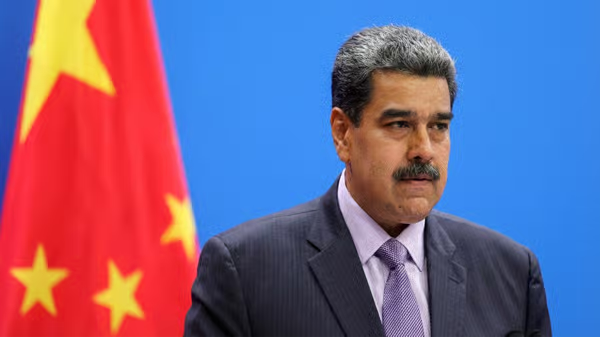
The leader of Venezuela is one of the most controversial figures in modern global politics. Nicolás Maduro Moros has ruled the oil-rich South American nation since 2013. His journey to the pinnacle of power is unlike that of almost any other world leader. He began his working life as a bus driver in the capital city of Caracas. Through political activism and a powerful mentorship, he rose to become the handpicked successor of the iconic revolutionary Hugo Chávez. For over a decade, Maduro has maintained an iron grip on power despite a catastrophic economic collapse, mass protests, and intense international pressure, defining an era of profound suffering and resilience for Venezuela.
Early Life: From Caracas Bus Driver to Union Organizer
Nicolás Maduro was born in Caracas in 1962. He did not come from a political dynasty or a wealthy family. As a young man, he found work as a bus driver for the Caracas Metro system. This ordinary job placed him at the heart of the city’s working class. He quickly became a prominent union organizer, fighting for drivers’ rights. This experience in grassroots mobilization was his first real political education. It connected him directly to the struggles of ordinary Venezuelans and shaped his populist, anti-elite rhetoric. His charisma and organizing skills on the bus routes of Caracas became the unlikely first step on a path to the presidential palace.
The Protege: Maduro’s Rise Under Hugo Chávez
Maduro’s life changed when he met the charismatic army officer Hugo Chávez in the early 1990s. He became one of Chávez’s earliest and most loyal followers. When Chávez was elected president in 1998, he rewarded Maduro’s loyalty with key roles. Maduro served as a member of the constitutional assembly, a legislator, and eventually as Minister of Foreign Affairs. In this role, he became Chávez’s global ambassador for “21st Century Socialism.” Chávez openly anointed Maduro as his political heir. This endorsement was the single most important factor in Maduro’s rise, transferring the loyalty of millions of “Chavistas” to the former bus driver as Chavez battled cancer.
Assuming Power After the Death of a Icon
Hugo Chávez died from cancer in March 2013. The political transition was immediate. Using his position as Vice President and Chávez’s dying wish, Maduro assumed the role of acting president. He then narrowly won a special presidential election a month later, defeating opposition leader Henrique Capriles. Maduro promised to continue the “Chávez Revolution” exactly as his mentor had designed it. However, he lacked Chávez’s personal magnetism, military background, and deep connection with the poor. From the start, his legitimacy was questioned by a fierce opposition that saw him as an illegitimate heir riding on the coattails of a true revolutionary leader.
 Presiding Over Economic Collapse and Hyperinflation
Maduro’s presidency coincided with the total collapse of Venezuela’s economy. Global oil prices crashed shortly after he took office. Instead of adjusting policy, Maduro doubled down on Chavez’s state-controlled economic model. Mismanagement, corruption, and price controls led to disastrous shortages of food, medicine, and basic goods. The country entered a period of hyperinflation that destroyed the currency’s value and wiped out savings. Millions fell into poverty. What was once Latin America’s richest nation per capita became a scene of humanitarian crisis, with malnutrition soaring and professionals fleeing the country, creating the largest refugee crisis in the hemisphere’s history.
Consolidating Power Through Authoritarian Measures
Facing growing street protests and an opposition-controlled parliament, Maduro moved to solidify his control. He packed the supreme court with loyalists and sidelined the National Assembly. In 2017, he created a powerful, all-loyal constitutional assembly to rewrite the rulebook. His security forces and allied civilian militias cracked down hard on protests, leading to hundreds of deaths and thousands of arrests. He banned leading opposition parties and disqualified their candidates from elections. Through these measures, Maduro systematically dismantled Venezuela’s democratic checks and balances, transforming the government into an authoritarian regime where all power flowed from the presidency.
International Pariah: Sanctions and Diplomatic Isolation
Maduro’s actions led to severe international consequences. The United States, the European Union, and many Latin American nations refused to recognize his 2018 re-election as legitimate. They imposed escalating economic sanctions, most crucially on Venezuela’s vital oil industry. Over 50 countries recognized opposition leader Juan Guaidó as the legitimate interim president in 2019. Venezuela was suspended from regional bodies. Only a handful of allies like Russia, China, Cuba, and Iran continued to support Maduro’s government. This isolation deepened the economic crisis but also allowed Maduro to frame the struggle as one of national sovereignty against “imperialist” aggression, rallying some nationalist support.
The Maduro Legacy: A Nation Divided and a Leader Unbowed
After a decade in power, Nicolás Maduro’s legacy is one of profound division and destruction. To his supporters, he is a defender of Chavez’s socialist project, a patriot standing up to American bullying. To his detractors, he is the architect of a historic national tragedy, a dictator who impoverished a wealthy nation for the sake of holding onto power. From a bus driver in Caracas to an iron-fisted leader surviving immense pressure, his story is a stark lesson in how personal loyalty, populist politics, and the control of security apparatus can maintain a leader in office long after their popular mandate has evaporated, leaving the future of Venezuela hanging in a precarious balance between continued endurance and sudden, dramatic change.